

Frameworks for Sustainable Business Growth in Tech

Mitch Wilder
Entrepreneur & Systems Thinker
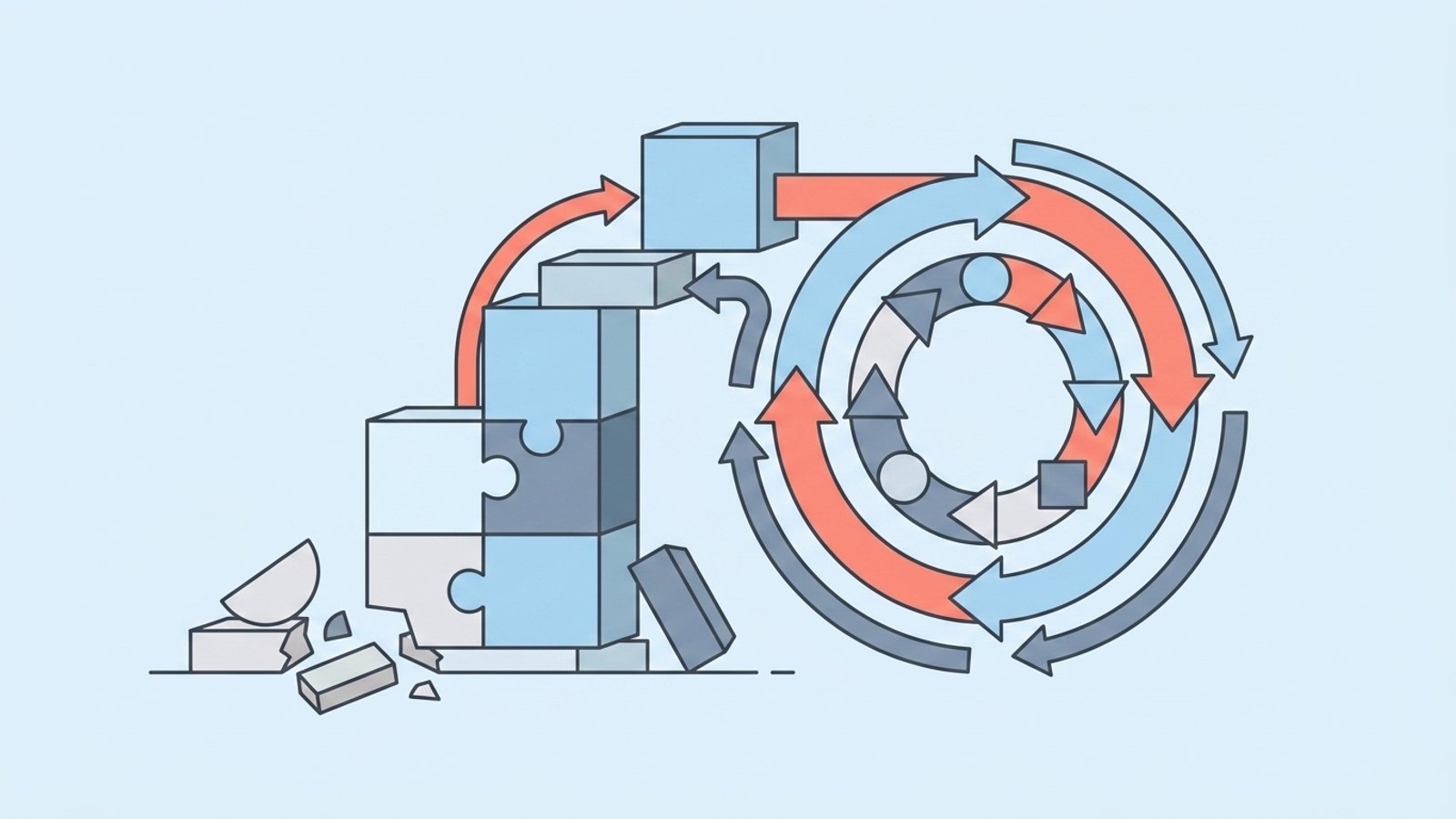
If every growth meeting ends with more campaigns, more features, and more spend, but no clearer path to durable scale, you do not have a growth system. You have a tactical backlog.
I think this is where a lot of tech companies get stuck. They confuse momentum with sustainability. Growth looks good on the surface, but underneath it’s expensive, fragile, and overly dependent on constant effort. My point is this: the goal of frameworks for sustainable business growth is not faster growth. It’s compounding growth.
Quick answer
A sustainable business growth framework is a structured model for growing a company without sacrificing profitability, retention, customer value, or long-term resilience.
If every growth meeting ends with more campaigns, more features, and more spend, but no clearer path to durable scale, you do not have a growth system. You have a tactical backlog.
I think this is where a lot of tech companies get stuck. They confuse momentum with sustainability. Growth looks good on the surface, but underneath it’s expensive, fragile, and overly dependent on constant effort. My point is this: the goal of frameworks for sustainable business growth is not faster growth. It’s compounding growth.
TL;DR
- Frameworks for sustainable business growth are decision-making models that help companies scale without relying on wasteful spend or founder heroics.
- In tech, sustainable growth depends on stacking the right frameworks together, not picking one in isolation.
- The most important layers are customer value, unit economics, growth loops, network effects, retention, experimentation, AI leverage, and operating cadence.
- If acquisition resets to zero every month, you need growth loops.
- If revenue is growing but margins and retention are weakening, you need a unit economics and cohort view.
- If users sign up but do not stick, product-led growth and Jobs-to-Be-Done should come first.
- If the team is busy but unfocused, a North Star Metric and OKRs usually fix the alignment problem.
- Sustainable growth becomes real when each new customer, transaction, data point, or workflow strengthens the business.
What are frameworks for sustainable business growth?
Frameworks for sustainable business growth are structured models that help companies grow predictably without relying on wasteful spending, short-term hacks, or founder heroics. In tech, the most effective frameworks combine customer retention, unit economics, growth loops, network effects, AI leverage, experimentation, and operating cadence.
A framework is not a tactic. A tactic is a move. A framework is how you decide which moves matter, in what order, and how to measure whether they’re actually working.
What sustainable growth means in tech
Sustainable growth in tech means growing revenue, users, and market share without breaking retention, margins, team capacity, or product quality.
The way that I look at it, unsustainable growth usually has a few predictable symptoms:
- Paid acquisition keeps rising
- CAC payback gets worse
- New cohorts retain worse than old ones
- Teams are overloaded
- Expansion happens before the model is proven
- AI gets added as a trend, not as leverage
In other words, growth is happening, but the business is not getting stronger.
The Sustainable Growth Stack
I use a simple mental model here: The Sustainable Growth Stack. This is the set of frameworks that, when layered together, turns growth from a series of tactics into an operating system.
| Layer | Framework | Core Question |
|---|---|---|
| 1 | North Star Metric | What customer value are we compounding? |
| 2 | Unit Economics | Can we grow profitably? |
| 3 | Growth Loops | Does growth create more growth? |
| 4 | Network Effects | Does each user make the product better or more valuable? |
| 5 | Product-Led Retention | Do users stay because the product matters? |
| 6 | Lean Experimentation | Are we learning faster than competitors? |
| 7 | Strategic Portfolio | Are we balancing core and future growth? |
| 8 | AI Leverage | Are we improving speed, margins, or defensibility? |
| 9 | OKRs and Operating Cadence | Can the team execute without chaos? |
You do not need to perfect every layer at once. But you do need to know where the constraint is.
Framework 1: North Star Metric
A North Star Metric is the one metric that best reflects customer value delivered. For sustainable growth, that metric should connect what the customer gets to what the business becomes.
For example:
- SaaS: weekly active teams completing a core workflow
- Marketplace: successful transactions per active buyer
- AI product: completed AI-assisted workflows
- Community platform: meaningful interactions per member
One of the things that I noticed is that companies often pick signups because they’re easy to track. That’s a mistake. Signups are activity. A North Star Metric should reflect value realized.
Choose this when the team is chasing too many metrics or growth feels busy but unfocused.
Framework 2: Unit economics and cohort durability
Unit economics tell you whether growth is healthy or just purchased. Plain and simple.
The core metrics usually include:
- CAC
- LTV
- LTV:CAC ratio
- CAC payback period
- Gross margin
- Contribution margin
- Net revenue retention
- Cohort retention
If you are a SaaS company, I’d look hard at activation, churn, payback, and expansion revenue. If you run a marketplace, I’d add take rate, repeat transaction rate, buyer and seller acquisition costs, subsidy dependence, and support costs.
Decision rule: If revenue is growing but CAC payback is getting longer or retention is weakening, do not scale acquisition harder. Fix the economics first.
Framework 3: Growth loops
A growth loop is a system where user activity creates output that brings in more users, engagement, or revenue. Unlike a funnel, it does not stop at conversion.
There are a few common types:
- Viral loops
- Content loops
- Marketplace loops
- Data loops
- Partner loops
- Expansion loops
This matters because funnels consume input. Loops can compound it.
A content-driven SaaS company might publish templates, examples, or use-case pages that bring in search traffic, activate users, and generate more product usage data. A marketplace can benefit as more supply attracts more demand, which then attracts more supply.
Ask this question: Does this channel compound, or does it reset to zero every month?
Framework 4: Network effects and marketplace liquidity
Network effects happen when a product becomes more valuable as more users, suppliers, developers, or data points join the system.
For marketplaces, this usually comes down to liquidity. The metrics that matter are not just GMV or top-line activity. I’d watch:
- Search-to-fill rate
- Time-to-match
- Buyer success rate
- Seller utilization
- Repeat transaction rate
- Supply-demand balance
- Dispute rate
A lot of marketplace teams expand too early. They spread supply thin, dilute demand, and wonder why growth stalls. The takeaway is simple: density before breadth.
Framework 5: Product-led growth and Jobs-to-Be-Done
Product-led growth works when the product itself drives acquisition, activation, retention, and expansion. But PLG only works when you understand the job the customer is hiring the product to do.
That’s where Jobs-to-Be-Done sharpens the strategy. Ask:
- What progress is the customer trying to make?
- What pain are they escaping?
- What first value moment matters most?
- What behavior predicts long-term retention?
If users sign up but never hit meaningful value, no amount of top-of-funnel growth will save you. Sustainable growth starts with product value becoming obvious fast.
This is exactly why Canva became such a powerful example. Canva saw that traditional design tools were powerful but intimidating for non-designers. Instead of adding more complexity, Canva made design accessible through drag-and-drop tools, templates, browser-based access, collaboration, and freemium adoption. That simplification became the growth engine, which is a reminder that sustainable growth often comes from making value easier to reach, not from making the product more complicated.
Framework 6: Lean experimentation
Lean experimentation is how you learn without burning capital. You form a hypothesis, run a focused test, define a success metric, and decide whether to scale, iterate, or stop.
A simple experiment template looks like this:
- Hypothesis: If we improve onboarding, activation will rise
- Segment: New users in one cohort
- Test: Guided setup flow
- Metric: Activation within 24 hours
- Timeframe: 2 weeks
- Decision rule: Scale if activation improves by target threshold
Right? The point is not to run more tests. The point is to run better tests.
Avoid this if your team treats experimentation like random idea generation. Learning requires discipline.
Framework 7: Strategic portfolio and AI leverage
Sustainable growth also means balancing short-term execution with long-term bets.
I think a lot of leaders either over-focus on core optimization or get distracted by shiny future opportunities. You need both. Use a portfolio view:
- Horizon 1: optimize the core
- Horizon 2: expand into adjacent opportunities
- Horizon 3: pursue transformational bets
AI fits across all three. Some use cases are immediate leverage:
- Support automation
- Personalization
- Forecasting
- Internal knowledge search
- Sales enablement
Others are moat-building:
- AI-native product workflows
- Proprietary data feedback loops
- Customer-specific intelligence
- Embedded automation that raises switching costs
Decision rule: Start with AI where it improves customer value, margin, or decision quality. Avoid AI projects that are impressive in demos but irrelevant to the business model.
Framework 8: OKRs and operating cadence
Frameworks do not execute themselves. That’s where OKRs and operating cadence come in.
A sustainable growth system usually includes:
- Quarterly OKRs
- Weekly growth meetings
- KPI dashboards
- A growth backlog
- A decision log
- Monthly strategy reviews
- Clear owners for metrics and initiatives
A lot of teams do not have a strategy problem. They have an execution rhythm problem. Too many priorities, too many meetings, not enough clarity.
How to choose the right framework
Here’s the simple version:
| If your problem is... | Start with... |
|---|---|
| Team lacks focus | North Star Metric |
| Growth is expensive | Unit Economics |
| Acquisition resets every month | Growth Loops |
| Marketplace is imbalanced | Network Effects and Liquidity |
| Users do not retain | Product-Led Growth and JTBD |
| Team has ideas but little learning | Lean Experimentation |
| AI feels important but unclear | AI Leverage |
| Execution feels chaotic | OKRs and Operating Cadence |
One page, one job. Diagnose the constraint, then choose the framework that addresses it.
A 90-day roadmap
If I were implementing frameworks for sustainable business growth in a tech company, I’d do it in this order:
Days 1-15: Diagnose
- Map acquisition channels
- Review CAC, payback, retention, and margins
- Segment your best customers
- Analyze cohorts
- Identify bottlenecks
Days 16-30: Define the North Star
- Choose one North Star Metric
- Define 5-7 input metrics
- Align ownership
- Remove vanity metrics from reporting
Days 31-45: Fix economics and retention
- Audit CAC by source
- Improve activation
- Identify poor-fit segments
- Review pricing, packaging, and gross margin
Days 46-60: Design growth loops
- Map current loops
- Identify bottlenecks
- Build one stronger loop
- Define loop metrics
Days 61-75: Prioritize AI and experiments
- Build an AI use-case backlog
- Score opportunities by impact and effort
- Launch 2-3 focused experiments
- Set a weekly review cadence
Days 76-90: Install the operating system
- Set quarterly OKRs
- Build the growth dashboard
- Assign metric owners
- Create a decision log
- Review performance weekly
Common mistakes that make growth unsustainable
There are seven mistakes I see over and over:
- Scaling before retention is proven
- Treating paid acquisition as the growth model
- Ignoring unit economics too long
- Expanding a marketplace before liquidity exists
- Using AI without a clear use case
- Confusing frameworks with execution
- Optimizing vanity metrics like signups, downloads, or impressions
My point is this: if growth does not improve the underlying quality of the business, it is not sustainable growth.
FAQ
What is a sustainable business growth framework?
A sustainable business growth framework is a structured model for growing a company without sacrificing profitability, retention, customer value, or long-term resilience.
Which growth framework is best for a tech startup?
For most startups, I’d start with a North Star Metric, unit economics, and lean experimentation. Marketplaces should add liquidity and network effects early.
How do network effects support sustainable growth?
Network effects make the product more valuable as more participants join. That can improve retention, lower acquisition costs, and strengthen the moat.
How does AI fit into sustainable growth?
AI supports sustainable growth when it improves margins, customer experience, personalization, decision-making, or defensibility. It should solve a business problem, not just signal innovation.
What metrics prove growth is sustainable?
The most useful metrics include retention, activation rate, LTV:CAC, CAC payback, gross margin, net revenue retention, referral rate, and cohort performance.
Conclusion: Build growth that compounds
The best frameworks for sustainable business growth do not help you chase activity. They help you build a business that gets stronger as it grows.
That means customer value improves. Economics improve. Acquisition compounds. Retention deepens. AI creates leverage. The team executes with less chaos and more clarity.
The takeaway is simple: don’t ask how to grow faster in the next quarter. Ask how to build a system where growth becomes more efficient, more defensible, and more valuable over time.
Want to know which sustainable growth framework fits your company? Start by identifying your single biggest growth constraint, then build from there.
Frequently asked questions about frameworks for sustainable business growth
What is a sustainable business growth framework?
A sustainable business growth framework is a structured model for growing a company without sacrificing profitability, retention, customer value, or long-term resilience.
Which growth framework is best for a tech startup?
For most startups, start with a North Star Metric, unit economics, and lean experimentation. Marketplaces should add liquidity and network effects early.
How do network effects support sustainable growth?
Network effects make the product more valuable as more participants join. That can improve retention, lower acquisition costs, and strengthen the competitive moat.
How does AI fit into sustainable growth?
AI supports sustainable growth when it improves margins, customer experience, personalization, decision-making, or defensibility. It should solve a business problem, not just signal innovation.
What metrics prove growth is sustainable?
The most useful metrics include retention, activation rate, LTV:CAC, CAC payback, gross margin, net revenue retention, referral rate, and cohort performance.