

Entrepreneurship for Beginners: The Biggest Mistake Is Building Before Demand

Mitch Wilder
Entrepreneur & Systems Thinker
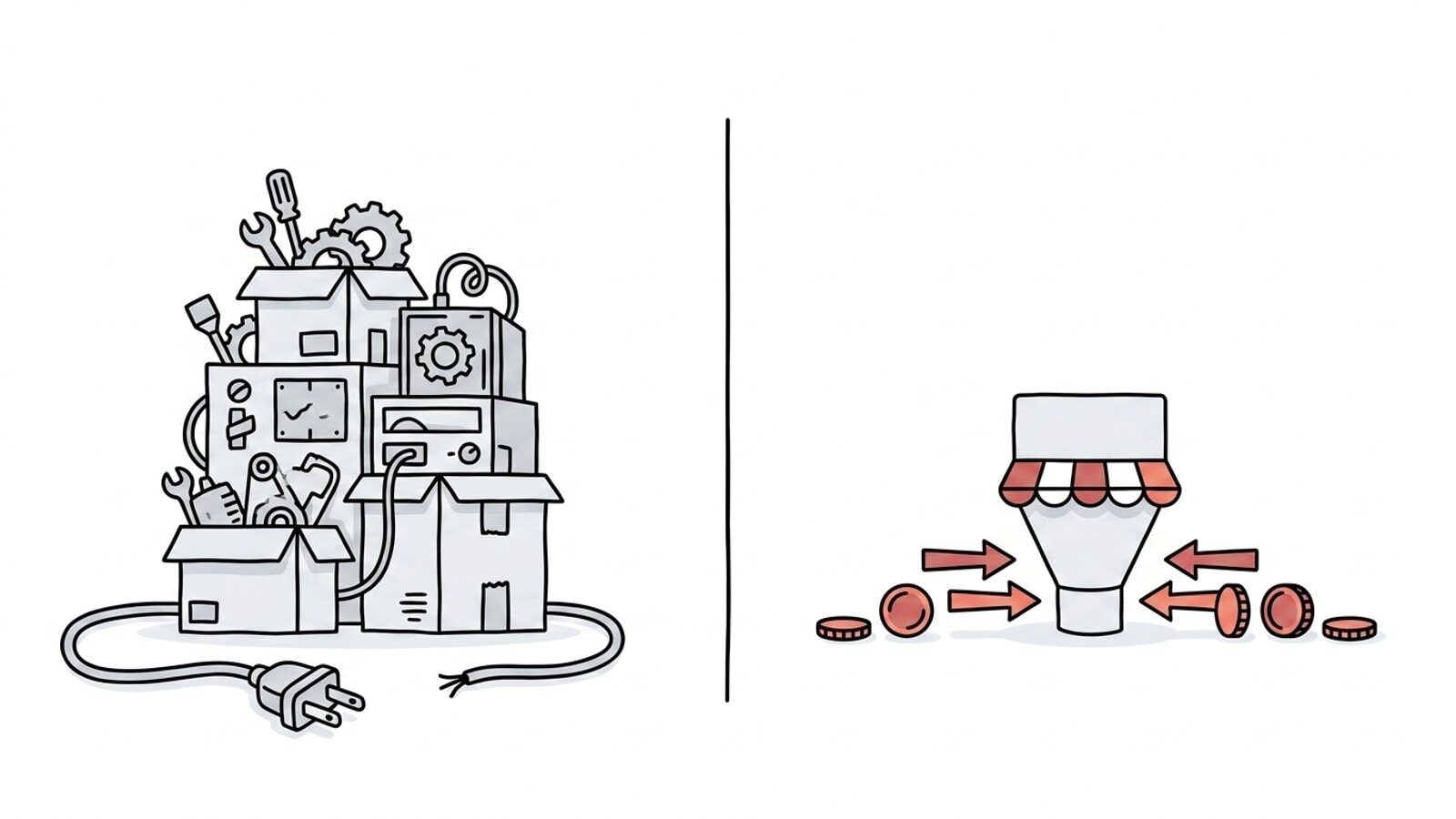
Most beginner entrepreneurs think the hard part is building the product. I think that is backwards. The hard part is proving that a specific customer has a real, urgent problem and will pay to solve it. Miss that, and you can spend months burning time, money, and energy on something nobody wants.
Quick Answer
Entrepreneurship for beginners starts with demand, not a product. Choose a specific market, find an urgent problem, speak with potential buyers, test a simple paid offer, and build only after the evidence is there.
Key Takeaways
- Start with demand, not product.
- Payment is stronger validation than compliments, likes, or generic interest.
- A narrow niche makes research, messaging, outreach, and sales easier.
- Your first goal is a few paying customers, not scale.
What is entrepreneurship for beginners?
Entrepreneurship for beginners means identifying a valuable problem, choosing a target market, validating demand, creating a simple offer, getting paying customers, and managing risk. It is not hype, logos, or calling yourself a founder. It is creating value in a market and turning that value into repeatable revenue.
There is real activity to study: the U.S. Census Bureau's Business Formation Statistics track applications for businesses likely to employ workers. But an application is not proof of a durable business. Customer behavior is more reliable than customer opinion.
How do you become an entrepreneur in 2026?
- Choose your entrepreneurial path.
- Pick a specific market and painful problem.
- Narrow to a clear niche.
- Validate with customer conversations and a paid offer.
- Get first customers, set up basic legal and financial systems, track a few metrics, then scale only after demand is proven.
Why building before demand is the biggest beginner mistake
Building feels productive: designing, writing, coding, planning, and tweaking. But if nobody buys, none of that work matters. Beginners build from assumptions, confuse interest with intent, and assume a better product automatically creates demand. It does not. A deposit, pilot, booked call, or pre-order means much more than “that is a great idea.”
What to do before building anything
Choose a specific customer and painful problem
Do not start with everyone who could use this. “Owner-operators of 5-to-20 person home-service businesses losing leads because follow-up is manual” is more useful than “small-business owners.” Look for money, time, risk, or reputation problems that are urgent, expensive, or emotionally frustrating.
Confirm that people already spend money
Ask whether buyers purchase tools, services, or workarounds, are frustrated with current solutions, and lose money or time if the problem persists. Then talk to them: what triggered the search, what have they tried, what nearly stopped a purchase, and what outcome would make this a no-brainer? Their language improves the offer and marketing.
The beginner demand-validation framework
- Write positioning. “We help [specific audience] achieve [specific outcome] without [specific obstacle].” If that is unclear, the idea probably is too.
- Interview 20 to 30 potential buyers. Learn pain, current alternatives, previous spending, and switching triggers.
- Test an offer, not an idea. Ask for a paid pilot, deposit, strategy session, demo, pre-order, or letter of intent.
- Start with a concierge MVP. Deliver the outcome manually before building software, a course, or automation.
- Look for buying signals. Pricing questions, urgency, decision-maker introductions, comparisons, and payment are strong. Likes and “keep me posted” are weak.
Best business types for beginner entrepreneurs
| Business type | Speed to revenue | Startup cost | Beginner fit |
|---|---|---|---|
| Freelancing, consulting, productized service | Fast | Low to medium | Strong |
| Local service business | Medium | Medium | Good |
| E-commerce | Medium | Medium | Mixed |
| SaaS or marketplace | Slow | Medium to high | Advanced |
If you have expertise, consulting or a productized service is usually a smart start: it creates early revenue and puts you close to customer problems. For an overview of entity, tax, and recordkeeping basics, use the IRS small-business guidance and get qualified local advice for your situation.
Common beginner mistakes and a 30-day plan
Avoid starting with passion instead of demand, trying to serve everyone, overbuilding, ignoring distribution, and confusing busywork with progress. I see founders run ads, post, hire help, and experiment with every channel without a consistent pipeline. A full marketing calendar and an empty pipeline is activity, not strategy.
Days 1 to 10: choose a market and niche
List skills, experience, and network; score three markets on pain, growth, access, and ability to pay; choose one niche.
Days 11 to 20: research customers
Talk to 10 to 20 prospects, document their language, identify repeated pain points, and note what they already buy.
Days 21 to 30: test a simple offer
Write positioning, create a basic sales page or deck, offer a pilot, service, workshop, or prototype, and ask for payment or a serious commitment. If nobody bites, adjust the niche, problem, offer, or message before building more.
Entrepreneurship for beginners checklist
- I know exactly who I serve and the urgent problem they want solved.
- I have evidence they spend in this category and have spoken to real buyers.
- I understand their objections and buying triggers.
- I can test a simple offer and know what counts as real validation.
- I have a plan to get early customers and am focused on learning, not merely launching.
Frequently Asked Questions
How do I start entrepreneurship as a beginner?
Start with a specific market and problem. Talk to real potential customers, validate willingness to pay, and test a simple offer before building a full product.
What is the easiest business for a beginner to start?
Usually a service-based business such as freelancing, consulting, or a productized service. These models are cheaper to start and help you learn directly from customers.
How much money do I need to start a business?
It depends on the model. Many service businesses can start lean; avoid large upfront spending until demand is proven.
How do I know if my business idea will work?
You cannot know with certainty, but you can reduce risk by validating demand. Look for buying behavior, not just positive feedback.
Should I build an MVP first?
Yes, but keep it minimal. An MVP exists to test learning and demand, not to show off features.
Final thoughts
Start with the customer, find painful demand, choose a niche where you can win, and validate before building. The expensive beginner mistake is not failing fast. It is building slowly in the wrong direction.