

Case Studies on Successful Network Effects: The AI-Era Lesson Founders Keep Missing

Mitch Wilder
Entrepreneur & Systems Thinker
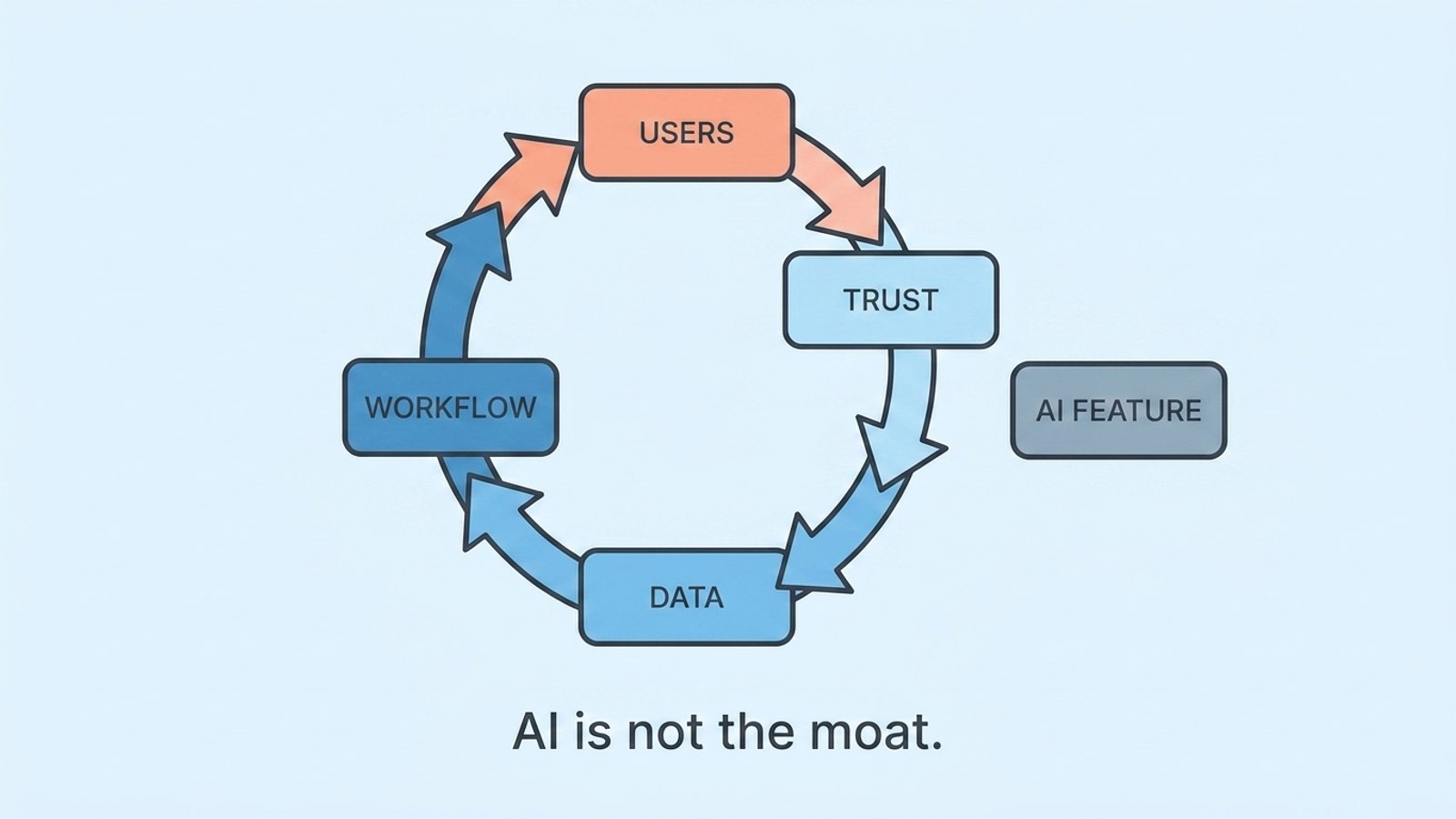
If you’re studying case studies on successful network effects to figure out how real category leaders scale, here’s the big lesson: AI is not the moat.
For a broader diagnostic beyond network effects, this guide explains a broader way to read business growth case studies and how to identify the growth lever behind each result.
I think a lot of founders are getting distracted by the wrong thing right now. They’re asking “How do I add AI?” when the better question is “What is the core interaction that creates value — and does every new participant make that interaction stronger?”
Quick answer
The best case studies on successful network effects — Airbnb, Uber, LinkedIn, TikTok, Figma — all show that the loop is the moat, not the technology sitting on top. AI can accelerate a loop that already exists. It cannot replace the structural design that makes a network compound.
Key Takeaways
- Network effects are engineered, not accidental. They come from focused design choices around trust, liquidity, workflow, data, and repeated participation.
- The best case studies on successful network effects include Airbnb, Uber, LinkedIn, TikTok, and Figma — each showing a different kind of compounding loop.
- AI is not a network effect by itself. It can accelerate a loop, but it cannot replace the structural conditions that make a network compound.
- Trust, liquidity, density, and habit are typically harder to copy than any model or feature set.
- The companies that win focus on the core interaction, not on adding impressive outputs.
What Are Successful Network Effects?
Successful network effects happen when a product grows more valuable as more participants join, interact, and contribute — and that value compounds in a way that is increasingly hard for competitors to match.
The key is that value improvement must be structural, not just additive. A bigger product is not automatically better. A product with stronger network effects means every new user, transaction, listing, or interaction makes the product genuinely more useful for everyone else.
Why This Matters in the AI Era
Right now, a lot of founders assume that adding AI creates a durable advantage. One of the things that I noticed is that AI features are often the most visible part of a product — but they are not always the defensible part.
The businesses that will win long term are the ones where AI strengthens an existing loop: better matching, better trust signals, better personalization, better fraud detection. AI amplifies what is already structurally true about the business.
5 Case Studies on Successful Network Effects
Airbnb: Trust Turned Supply and Demand Into a Flywheel
Airbnb’s network effect is not primarily about listing count. It is about trust. The two-sided review system — hosts rating guests, guests rating hosts — created a reputation layer that made the marketplace safer and more reliable for everyone.
More reviews improved trust. More trust improved booking rates. More bookings attracted more hosts and guests. More participation generated more reviews.
The moat is the trust data — years of verified reputation signals that a new entrant cannot replicate quickly, even with a better interface or more AI features.
The AI-era lesson: AI can improve fraud detection and response quality, but the review history and trust data are the hard-to-copy part.
Uber: Density Was the Product
Uber’s earliest and clearest network effect was geographic density. More drivers in a city reduced wait times. Shorter wait times attracted more riders. More riders created more earnings opportunities for drivers.
The core interaction was simple: a match between a rider and a nearby driver. Every successful ride improved the data needed for better matching in that specific geography.
The AI-era lesson: Dynamic pricing and routing algorithms made the network more efficient, but the density data — built from billions of real rides in specific markets — is what makes Uber hard to dislodge.
LinkedIn: Every User Became an Asset
LinkedIn built one of the clearest identity-based network effects in tech. Your profile is your professional identity. The people who endorse your skills, write your recommendations, and connect with you create value that belongs to the network, not just to you.
The more participants on the platform, the more valuable each connection, each job post, and each skill endorsement becomes. And because the professional identity data lives on LinkedIn — not on any individual device — switching costs are extremely high.
The AI-era lesson: AI-powered job recommendations and feed ranking amplify the value of existing connections. But the professional graph itself — built over 20+ years of verifiable career data — is the irreplaceable moat.
TikTok: AI Accelerated the Loop, but the Loop Was the Moat
TikTok is the most interesting case because AI is so central to its product. The recommendation engine is legitimately impressive. But the network effect is not the algorithm itself.
The network effect is the content creation loop: more creators produce more content, which improves the training signal for the recommendation engine, which produces better personalization, which increases watch time, which attracts more creators.
The AI made the loop faster and more effective. But the compounding value comes from the behavior data generated by hundreds of millions of users interacting with content over time.
The AI-era lesson: AI can dramatically accelerate a well-designed network loop. It cannot create a loop where none exists.
Figma: Collaboration Transformed Software Into a Networked Product
Figma turned a traditionally solo workflow — design — into a multiplayer, real-time collaboration environment. That shift created a direct network effect: the more designers, product managers, and engineers in a shared file, the more useful the file becomes.
Comments, version history, shared component libraries, and team templates all compound over time. Each collaborator makes the shared workspace richer. The switching cost is not just a feature gap — it is the loss of accumulated shared context.
The AI-era lesson: Figma’s AI features improve individual workflow. But the collaboration data — the shared history, feedback, and design system context — is what creates stickiness that AI alone cannot replicate.
Where Does AI Actually Fit in a Network-Effects Business?
AI fits cleanly into three roles:
1. Improve matching
Better match quality means more successful transactions, which improves retention and referral. AI can improve matching in marketplaces, job boards, content feeds, and recommendation systems — when trained on proprietary outcome data.
2. Improve trust and quality
AI-powered fraud detection, review authenticity scoring, and quality control protect the network from degradation. This is especially important in two-sided marketplaces where bad actors reduce value for everyone.
3. Improve the feedback loop
AI can extract signal from interaction data faster than manual analysis — surfacing churn risk, identifying successful onboarding patterns, and predicting where the network is thinning. That makes the loop more responsive and harder to copy.
Frequently Asked Questions About Case Studies on Successful Network Effects
What are the best case studies on successful network effects?
The best case studies on successful network effects include Airbnb, Uber, LinkedIn, TikTok, and Figma. Each shows a different kind of compounding loop — from marketplace liquidity to data feedback loops to collaboration-based growth.
What is the biggest lesson from network effects case studies?
Network effects are engineered. They come from focused design choices around trust, liquidity, workflow, data, and repeated participation — not from adding impressive technology on top of a weak structural foundation.
Is AI a network effect?
No. AI is not a network effect by itself. AI can strengthen a network effect if it helps the product improve as more users interact with it, but the compounding dynamic still comes from the network design.
What makes AI defensible in a startup?
AI becomes more defensible when it is tied to proprietary data, workflow integration, and strong feedback loops. The model matters less than the system feeding and benefiting from it.
Can SaaS companies have network effects?
Yes. Slack and Figma are strong examples. When more teammates, files, workflows, plugins, or collaborators make the product more useful, SaaS can absolutely develop network effects.