

What Are the Different Types of Business Consulting? 12 Key Categories Explained

Mitch Wilder
Entrepreneur & Systems Thinker
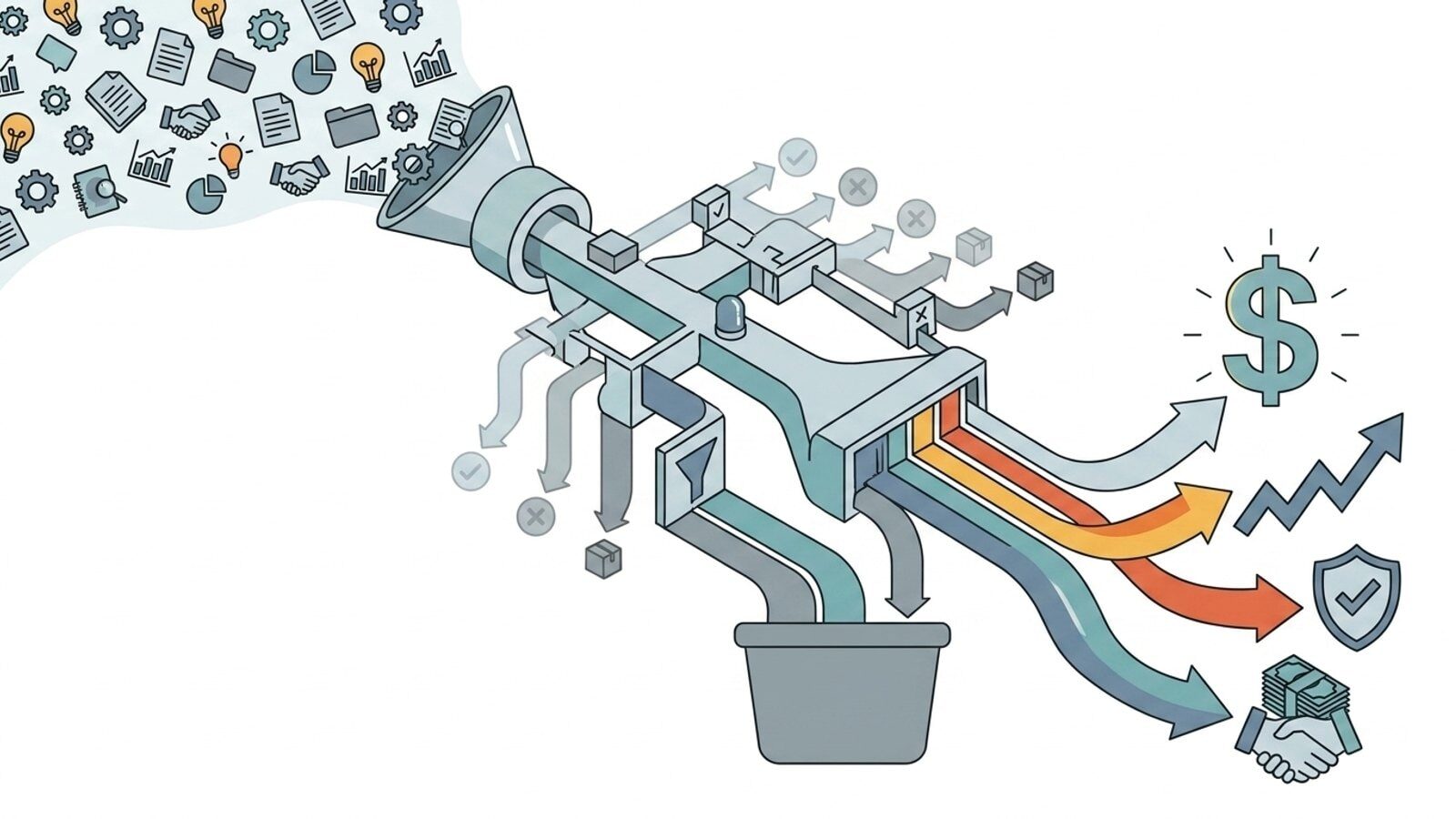
The different types of business consulting exist because business problems are different. Hiring the wrong kind wastes time, money, and momentum. I look at the choice through the problem first, not the title.
Quick answer
The main types of business consulting include strategy, management, operations, financial, HR, IT, digital transformation, marketing, sales, risk and compliance, M&A, and startup consulting. Choose the specialty that directly addresses the business constraint.
Key Takeaways
- Each specialty solves a distinct business outcome.
- Small businesses commonly start with marketing, sales, financial, operations, or strategy help.
- Specialists usually beat generalists when the problem is specific and costly.
Quick Summary of Consulting Types
| Type | Main focus |
|---|---|
| Strategy | Direction, positioning, growth |
| Management | Execution, structure, operating model |
| Operations | Processes, capacity, cost |
| Financial | Cash flow, forecasting, pricing |
| HR | Hiring, retention, leadership |
| IT | Technology, security, integration |
| Digital transformation | Automation, data, AI workflows |
| Marketing | Positioning, visibility, lead generation |
| Sales | Pipeline, pricing, conversion |
| Risk and compliance | Regulatory and operational exposure |
| M&A | Valuation, diligence, integration |
| Startup | Validation, MVP, go-to-market |
How to Match a Problem to a Consultant
| If your problem is | You probably need |
|---|---|
| Unclear direction or market position | Strategy consultant |
| Poor cross-functional execution | Management consultant |
| Bottlenecks and waste | Operations consultant |
| Cash flow, margin, or valuation | Financial consultant |
| Weak lead flow or positioning | Marketing consultant |
| Low close rates | Sales consultant |
| Disconnected or insecure systems | IT consultant |
| Manual workflows or AI adoption | Digital transformation consultant |
What Each Specialty Does
Strategy and management consulting
Strategy determines where to compete, how to win, and what to prioritize. Management consulting turns that direction into organizational design, leadership alignment, performance improvement, and an operating model that can move.
Operations and financial consulting
Operations work improves SOPs, workflow, capacity, quality, and cost. Financial work addresses cash flow, forecasting, pricing, profitability, fundraising preparation, and valuation. A growing company can have an efficiency problem before it has a revenue problem.
People, technology, and transformation consulting
HR consulting addresses recruiting, compensation, onboarding, performance, leadership, and compliance. IT consulting covers system selection, cloud migration, cybersecurity, integrations, and data infrastructure. Transformation work changes workflows and decision-making through automation, data, and AI.
Marketing, sales, risk, M&A, and startup consulting
Marketing creates qualified demand; sales improves conversion and revenue operations. Risk and compliance work reduces exposure. M&A work supports valuation, diligence, exits, acquisitions, and integration. Startup consulting helps founders validate the opportunity before they spend months building the wrong thing.
Generalist vs. Specialist
Use a generalist for broad diagnosis when the constraint is unclear. Once it is clear, specialization usually wins. A strong niche has an urgent, expensive, measurable problem; a buyer with budget; a growing market; and credible proof. For the broader framework, start with business consulting services.
Frequently Asked Questions
What are the main types of business consulting?
The main types are strategy, management, operations, financial, HR, IT, digital transformation, marketing, sales, risk and compliance, M&A, and startup consulting.
What type of consulting is most in demand?
IT, digital transformation, financial, operations, sales, marketing, and strategy consulting are among the most in-demand categories because they solve urgent, measurable problems.
What type of consultant does a small business need?
Most small businesses first need marketing, sales, financial, operations, or strategy consulting. The right fit depends on whether the bottleneck is leads, conversion, cash flow, efficiency, or direction.
What is the most profitable type of consulting?
The most profitable niches solve expensive, urgent, measurable problems, including financial consulting, pricing, sales performance, cybersecurity, digital transformation, and M&A support.
Is business consulting a good career?
Business consulting can be a strong career when you have real expertise and solve a valuable problem. Specialists with measurable outcomes usually stand out more easily than broad generalists.